For a milestone assignment in my Global Engagement Capstone seminar, we were tasked with selecting a photo and analyzing it through a critical, intercultural lens. I chose a photo from my time abroad in Egypt, inspired by the works of José Ortiz Echagüe, a Spanish Photographer I’d learned about in SPAN267 – Image/Word: Narrative and Photography in Contemporary Spain, who used landscape photography to tell stories that spanned centuries of time. My image and reflection are as follows:
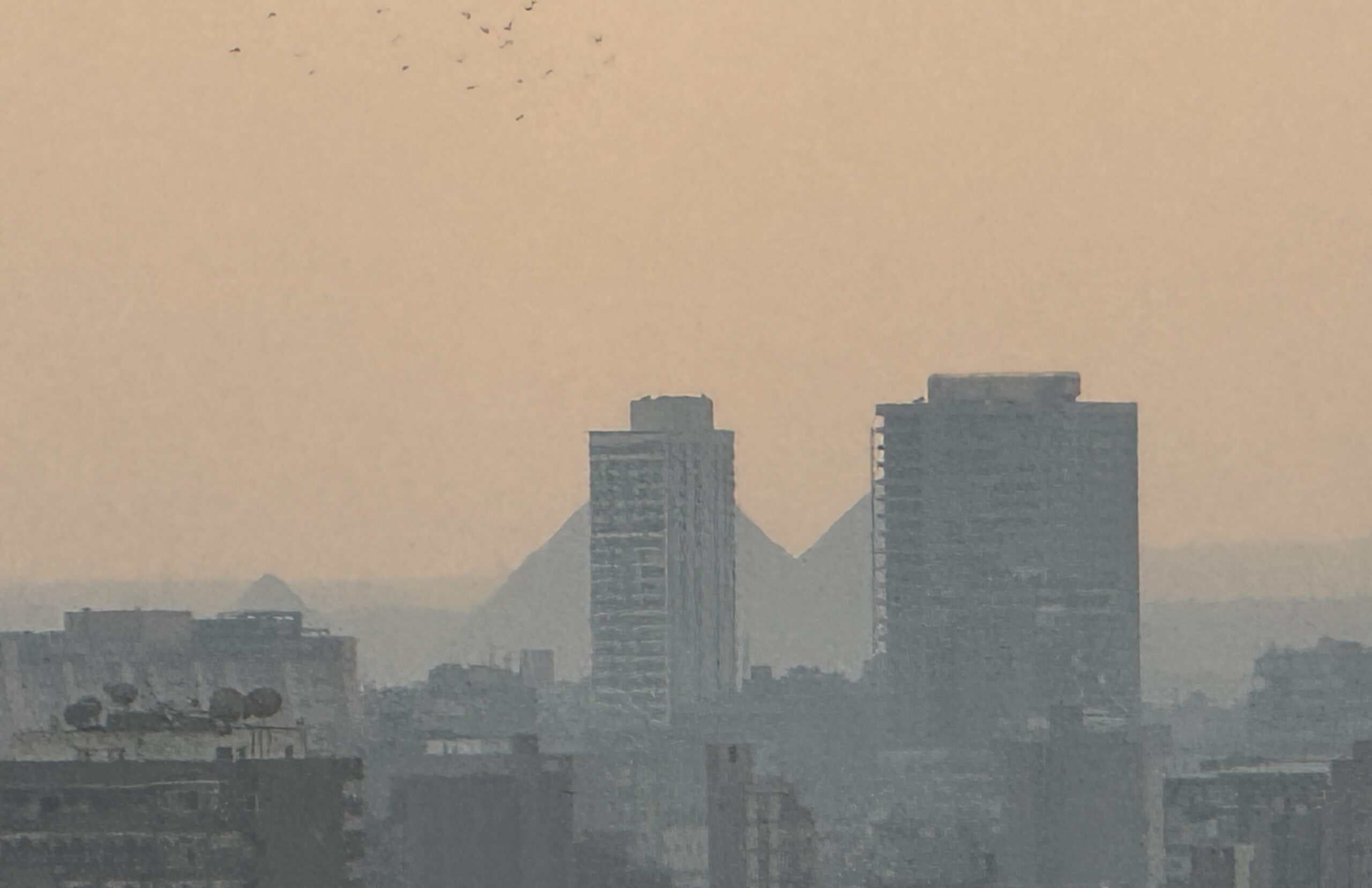
Even if this picture didn’t exist, the image is engraved in my head as my first time seeing the Pyramids. 11 miles/17 kilometers away from the Giza Necropolis stands Al-Azhar Park, a stretch of greenery, gathering areas, restaurants, and pathways amidst the desert city of Cairo. From these pathways, several of these quite elevated, one can see the multifaceted city of Cairo, often termed the City of a Thousand Minarets in reference to the multitude of mosques dotting the urban landscape.
The pathways lead to one platform, however, from which one can look towards the southwest, where something distracts from the minarets: the silhouette of three triangles in the distance. The image, shot on my iPhone 15 Pro’s 5x zoom lens, depicts the contrast between the sea of edifices and structures as old to Cleopatra as Cleopatra is to us. This contrast exists as a reminder of the anachronistic nature of Cairo’s cityscapes, filled with buildings and architecture that have been as important to history as they have been to present-day life over the course of over 4000 years.
Despite the omnipresence of the pyramids, both in Cairo as a city and in its pop culture, the buildings in front of each structure are taller yet: a set of hotels perfectly and plainly making the view exclusive for their guests. The commodification of history for tourism was something particularly striking to me as I explored the city, with millennia of civilization in its bones. It seemed like the historical edifices and sites took on new life. I’m not sure if it was an erasure or an addition. The Islamic mosques become study and tourism sites in addition to religious ones, and the Ancient Egyptian architecture becomes a space for archaeology and cute Instagram photos. Their original purposes are reduced to a subject of study and their appearance is reduced to something cool to look at from a hotel window.
