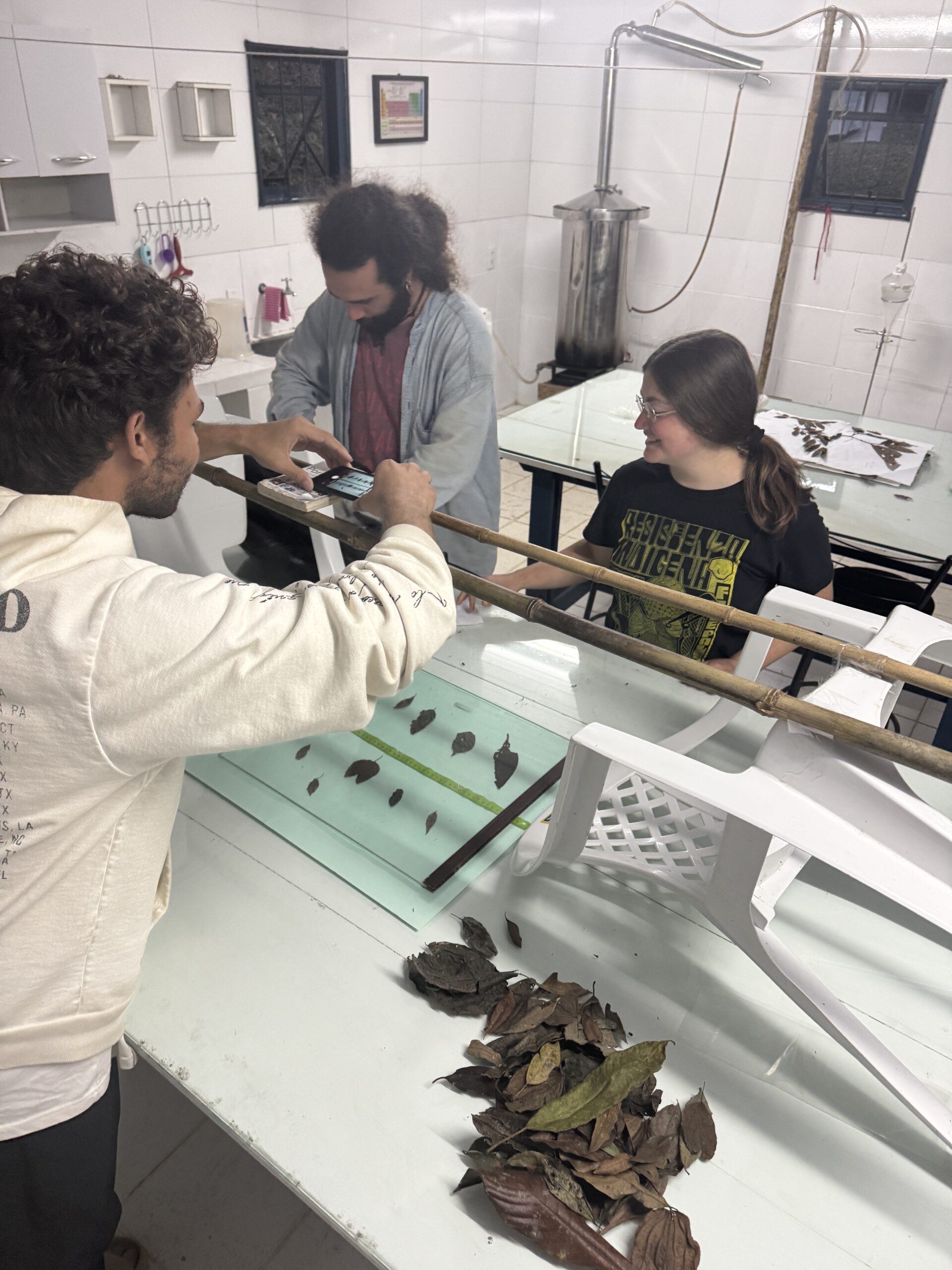
Immediately following my semester abroad in Cairo, I wanted to keep exploring new horizons. I wanted to push the boundaries of the environments I could inhabit and the extent to which my intercultural flexibility could, in fact, flex. I found an opportunity to do so by way of Professor Anita Deeg-Carlin from GEM, who had previously recommended the Brazilian NGO Iracambi’s Forest Research Center volunteer program. I began conversations with Luísa Mendonça, the volunteer coordinator, as well as with João Paulo, the communications and social media director, and it became clear that it was an adventure I wanted to take on. I applied for the Wesleyan Summer Grant and was incredibly excited to have received the full grant, which allowed for my travel and stay in Brazil for June and July. At Iracambi, I found myself able to connect with environmentalism in a much deeper way than I’d ever had the chance to do so before, because the time I spent volunteering around the center, interacting with Brazilian students from middle school to college, assisting researchers, and taking pictures and videos for the social media page gave me chance to learn about new topics while also pushing my film, visual storytelling, multicultural, and language skills in a completely new environment.
One of my biggest takeaways from my experiences in the Atlantic Rainforest, the second biggest in Brazil, was a real-life look at the importance of maintaining a healthy relationship between the environment and the people that live within it. I’ll admit that before my trip to Iracambi, I had a mental image of the rainforest as a place where the only humans living there would be found in research centers like Iracambi, and that the rest was either a vast expanse of greenery, or a site for destruction or tragedy at the hands of industry. I was surprised and delighted to find a true sense of community within the forest of farmers and agroforesters, people taking on conservation and reforestation efforts while also growing crops that they could sell. This synergy between people and the landscapes they inhabit reminded me of the UN Sustainable Development Goals we touched on in Intro to Global Engagement; during those conversations, it stuck out to me that truly sustainable action comes from creating a situation in which people can work in harmony with the space around them. If both people and place aren’t healthy, one will contaminate the other in some form. As David Attenborough said in a recent interview with Anderson Cooper on 60 Minutes, “We are part of the world. We are one another. We are all a part of life, which is all interconnected.”
I was privileged to witness this interconnection come to a front at Semana do Fazendeiros, a week-long event in which farmers, indigenous communities, and activists from all over the state of Minas Gerais come together at the Universidade Federal de Viçosa (UFV) in Viçosa, a municipality relatively close to Iracambi. We – myself, fellow volunteers, researchers, and our research coordinator Gabi Soares, went as a group representing Iracambi and enjoyed sharing with wonderful groups of people all dedicated to conservation and uplifting the environment and their communities. Part of the Semana do Fazendeiros experience is shown in the video below, shot and edited by me. The short clip shows snippets of my time in Brazil as a whole, including vibrant communities and places everywhere from Viçosa and Iracambi, interspliced with some touring breaks we took in cities like Ouro Preto and Rio De Janeiro. It’s only a small glimpse into the multifaceted nature of the conservation and community I encountered during my summer experience.
